
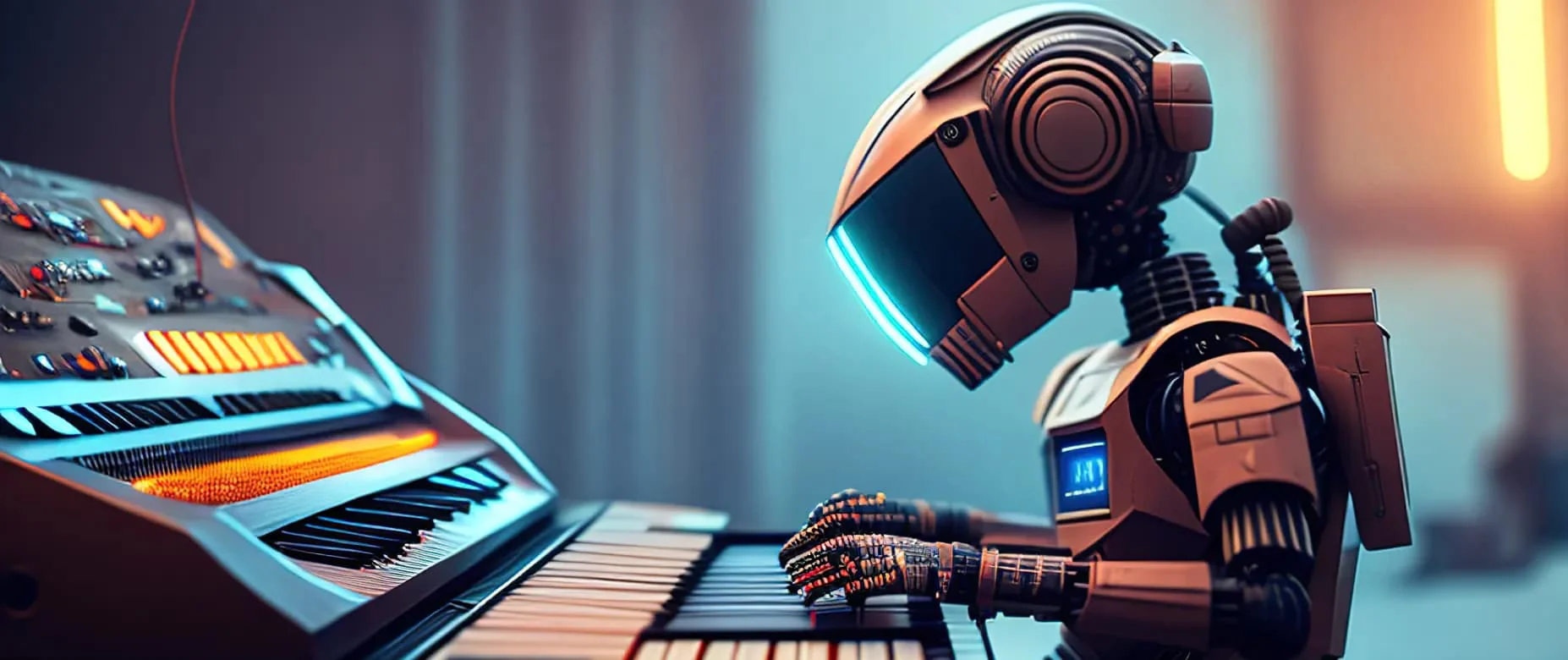
AI and Music Production: How Artificial Intelligence Is Transforming Sound
Artificial intelligence is no longer a futuristic concept in music production—it is a present-day creative partner. From generating melodies to mastering tracks, AI is reshaping how music is composed, recorded, mixed, distributed, and even experienced. What once required expensive studios and teams of engineers can now be done with smart software and a laptop.
The relationship between technology and music has always been close. From analog tape machines to digital audio workstations (DAWs), each technological leap has redefined artistic possibility. Today, AI represents the next major transformation—one that expands creativity while raising important questions about originality, authorship, and the role of human artistry.
A Brief History of Technology in Music
Music production has evolved dramatically over the past century. Early recording innovations by companies like EMI and studios such as Abbey Road Studios revolutionized how sound could be captured and manipulated. The introduction of synthesizers in the 1960s and 1970s allowed artists like Kraftwerk to explore electronic soundscapes that defined entire genres.
The 1980s and 1990s saw the rise of digital production tools, with DAWs such as Pro Tools becoming industry standards. Sampling and MIDI technology democratized music creation. By the 2000s, platforms like Ableton enabled producers to compose and perform electronically with unprecedented flexibility.
AI builds upon this trajectory. Instead of merely recording and editing sound, AI can now analyze patterns, generate compositions, and even mimic stylistic traits of established artists.
What Is AI in Music Production?
Artificial intelligence in music production refers to algorithms—often powered by machine learning and neural networks—that can:
Compose original melodies and harmonies
Generate beats and rhythms
Create synthetic voices
Assist with mixing and mastering
Analyze listener preferences
Emulate musical styles
Unlike traditional rule-based software, AI systems learn from vast datasets of music. By studying chord progressions, rhythmic patterns, timbres, and structures across genres, these systems can predict and generate new musical sequences.
Large-scale generative models, similar to those powering conversational AI, are now trained on audio data. These models do not simply copy existing songs; they identify statistical patterns and create new outputs based on learned relationships.
AI as a Creative Partner
One of the most significant changes AI introduces is its role as a collaborator rather than just a tool.
Melody and Composition Tools
Platforms like AIVA and Amper Music allow users to generate full orchestral pieces within minutes. A user selects a genre, mood, and tempo, and the AI composes a track accordingly.
More recently, generative systems such as OpenAI Jukebox and Google MusicLM have demonstrated the ability to produce stylistically coherent songs from text prompts. These tools can simulate genres ranging from classical symphonies to hip-hop beats.
For producers, this means instant inspiration. Rather than staring at a blank project file, they can start with AI-generated motifs and refine them into fully realized tracks.
Lyric Generation
AI lyric-writing tools can suggest rhymes, metaphors, and thematic variations. While human emotion remains central to songwriting, AI can accelerate brainstorming and help overcome writer’s block.
In pop production—where turnaround times are often tight—this can significantly speed up the creative process.
AI in Mixing and Mastering
Mixing and mastering are technical processes that traditionally require trained ears and expensive equipment. AI has dramatically lowered the barrier to entry.
Services like LANDR use machine learning to analyze a track and apply EQ, compression, limiting, and stereo enhancement automatically. By comparing new tracks against large libraries of professionally mastered songs, these systems optimize loudness and clarity.
Similarly, AI-powered plugins can:
Detect and remove background noise
Automatically tune vocals
Balance frequency ranges
Suggest EQ adjustments
Even industry professionals use AI-assisted tools to speed up repetitive tasks, freeing them to focus on creative decisions rather than technical corrections.
Voice Synthesis and AI Vocals
One of the most controversial areas of AI in music is voice cloning and synthesis.
Text-to-speech and singing synthesis systems can replicate vocal characteristics with striking realism. For example, Vocaloid has long allowed users to create songs using synthetic vocal avatars. Virtual pop stars like Hatsune Miku have even performed live concerts.
More advanced deep-learning models can now mimic real artists’ voices. Viral AI-generated tracks imitating artists such as Drake and The Weeknd have sparked legal and ethical debates about identity, consent, and intellectual property.
Voice synthesis opens creative possibilities—such as preserving the voices of aging performers—but also challenges existing copyright frameworks.
AI and Genre Innovation
AI can combine stylistic features from multiple genres to create hybrid sounds. By analyzing jazz harmony, trap rhythms, and classical orchestration simultaneously, models can generate compositions that might not occur naturally within a single human tradition.
Artists are increasingly incorporating AI as part of their creative identity. Producer Holly Herndon, for example, developed an AI “vocal twin” trained on her own voice to explore new forms of expression.
This blending of human and machine creativity is producing entirely new subgenres and aesthetic movements.
Democratization of Music Creation
Perhaps the most profound impact of AI is accessibility.
Previously, professional-level music production required:
Studio access
Engineering expertise
Expensive hardware
Years of training
AI tools dramatically reduce these barriers. A teenager with a laptop can generate orchestral arrangements, mix tracks, and distribute music globally.
Streaming platforms such as Spotify and Apple Music further amplify this accessibility. AI-driven recommendation systems analyze listener behavior to suggest personalized playlists, helping independent artists reach audiences without major label backing.
This democratization has led to an explosion of independent releases worldwide.
Personalization and Adaptive Music
AI is also changing how music is experienced.
Video games use adaptive soundtracks that respond dynamically to player actions. Titles developed by companies like Electronic Arts incorporate music engines that shift tempo and intensity in real time.
In streaming, recommendation algorithms analyze user preferences, listening history, and contextual signals to curate mood-based playlists.
The future may involve hyper-personalized soundtracks that adjust to biometric data—heart rate, stress levels, or time of day—creating unique listening experiences for each individual.
Ethical and Legal Challenges
While AI unlocks creative power, it also raises serious concerns.
Copyright and Ownership
If an AI model trains on thousands of copyrighted songs, who owns the output? The programmer? The user? The artists whose work was part of the training data?
Legal systems are still catching up. Lawsuits involving record labels and AI companies continue to shape policy.
Authenticity and Identity
If a song sounds exactly like a famous artist but was generated by AI, does it diminish the value of the original? Or is it a new art form altogether?
For many fans, authenticity is tied to human experience—struggle, emotion, imperfection. AI-generated music challenges traditional definitions of artistic identity.
Job Displacement
Some fear AI could replace session musicians, composers for commercials, or audio engineers. However, history suggests technology often shifts roles rather than eliminating them entirely.
Just as synthesizers did not eliminate guitarists, AI may redefine—but not erase—human musicianship.
The Human Element
Despite AI’s capabilities, human emotion remains central to music.
Algorithms can analyze patterns, but they do not feel heartbreak, joy, rebellion, or nostalgia. Music resonates because it reflects lived experience. AI can simulate structure and style, yet human intention gives music cultural meaning.
Many producers treat AI as a creative assistant rather than a replacement. It can suggest chord progressions, generate textures, or automate mixing tasks—but final artistic decisions still rest with people.
The relationship may be similar to photography and digital editing software: powerful tools expand expression, but the artist’s vision remains essential.
The Future of AI in Music Production
Looking ahead, several trends are likely:
Real-Time Collaboration
AI systems may co-create with artists live in the studio, responding instantly to improvisation.
Emotion-Aware Composition
Music generated in response to emotional cues or biometric data could enhance wellness and therapy applications.
Fully Synthetic Artists
Virtual performers may gain fanbases comparable to human stars.
AI-Assisted Education
Intelligent tutoring systems could teach music theory, production, and instrumentation interactively.
Hybrid Creativity
The most compelling works may come from artists who skillfully blend human intuition with machine intelligence.
Conclusion
AI is not replacing music production—it is transforming it. From composition and mixing to distribution and personalization, artificial intelligence is expanding the boundaries of what is possible in sound.
The technology democratizes access, accelerates workflows, and introduces new aesthetic possibilities. At the same time, it challenges legal frameworks and cultural assumptions about creativity and authorship.
Ultimately, music has always evolved alongside technology. Just as electric guitars, synthesizers, and digital workstations once seemed revolutionary, AI represents the next chapter in this ongoing story. The future of music production will likely be neither purely human nor purely machine—but a dynamic collaboration between the two. And in that collaboration lies a new era of sound.
1drayoddioworx