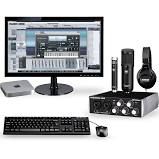
One of the most rewarding and frustrating tasks of the home recording enthusiast is learning how to use new gear. You get so excited when it gets unwrapped, hooked up, and the power button glows, but then its time for the fun (or pain) to begin! Taking the time to learn how to properly care for, use, and connect your gear is a topic many home recording professionals kind of glean over. You can have the most awesome setup in the universe, but if you don't know how to use it, then what's the point? You need to learn the ins and outs of all of your gear. From midi cables to RCA jacks; USB audio converters to USB microphones and keyboards; Analog mixing boards to digital DAW Software; etc , you must take the necessary time to ensure you are using gear the right way. Went to a fellow recorders home once and wasted countless hours trying to find the right cables, trying to reconnect sound sources, and unsuccessfully setting up the mikes and mike stands. Needless to say we spent very little time actually recording because his gear was scattered everywhere. From that experience I learned three key components in knowing your gear: get organized, get trained, and get moving!
Getting organized means taking the time to look at your studio setup with new eyes. Ask the following questions: Is my studio free of clutter? Is my studio taking up unnecessary space? Am I using all the gear in my studio? Do I need to upgrade my equipment? Just starting with those kinds of reality check questions can get you gear-ready! Find a way to hide or bind loose cords and cables to give your studio that professional look. Move some gear around to have a better workflow. If you have to run from one side of the room to press play, and then run all the way across the room for that guitar solo, then it might be time tor rethink your setup. Remember in an earlier post I mentioned the importance of ensuring your space is neat. Well your gear needs to be neat as well. Keyboards and monitors need to be wiped down, tape decks and monitors need to be dusted, and your instruments should be cleaned for optimal performance.
Getting trained doesn't always mean formal training (although you can't go wrong with formal training). But getting trained means staying updated on whatever gear you may possess. This could be as simple as finding a new bell or whistle from the owner's manual, or visiting a YouTube video to see how other's are using the gear. You simply need to make sure you are keeping up with what you have. Many software products will have updates for you to download, so take advantage as there is usually no additional fees to stay current. For instance, the DAW program, REAPER, offers free trials, downloads, and upgrades with each new version. But before upgrading all of your gear, get to know all the possibilities of what you possess now, before having to learn everything all over with a new product. Personally, I still use Reason 4.5. There have been many updates since my purchase, but there is a life-long learning curve in the software I'm still using.
Getting moving is simply that---MOVE with your gear! If you are not constantly recording tracks, making songs, or making demos, then you are stagnant. You can't wait for Mr. Bigwig record label to get your track rolling---you have to keep at your craft. You need to make sure your gear is going strong daily. You made the investment in dollars and time with your gear, so put it to use. You can use your gear to create a podcast; make mix-tapes for your friends and family; become a DJ on the weekends; record background music for small shops; etc. The possibilities are endless. Just be creative and keep working at it! You must continue to move toward your goals as a home recording producer, and only you know where you want to go! See you on Day 4!
Dray